Amatriciana with guanciale, rich and well balanced
A Roman-style amatriciana with crisp guanciale, tomato and Pecorino, full of flavour and well balanced.
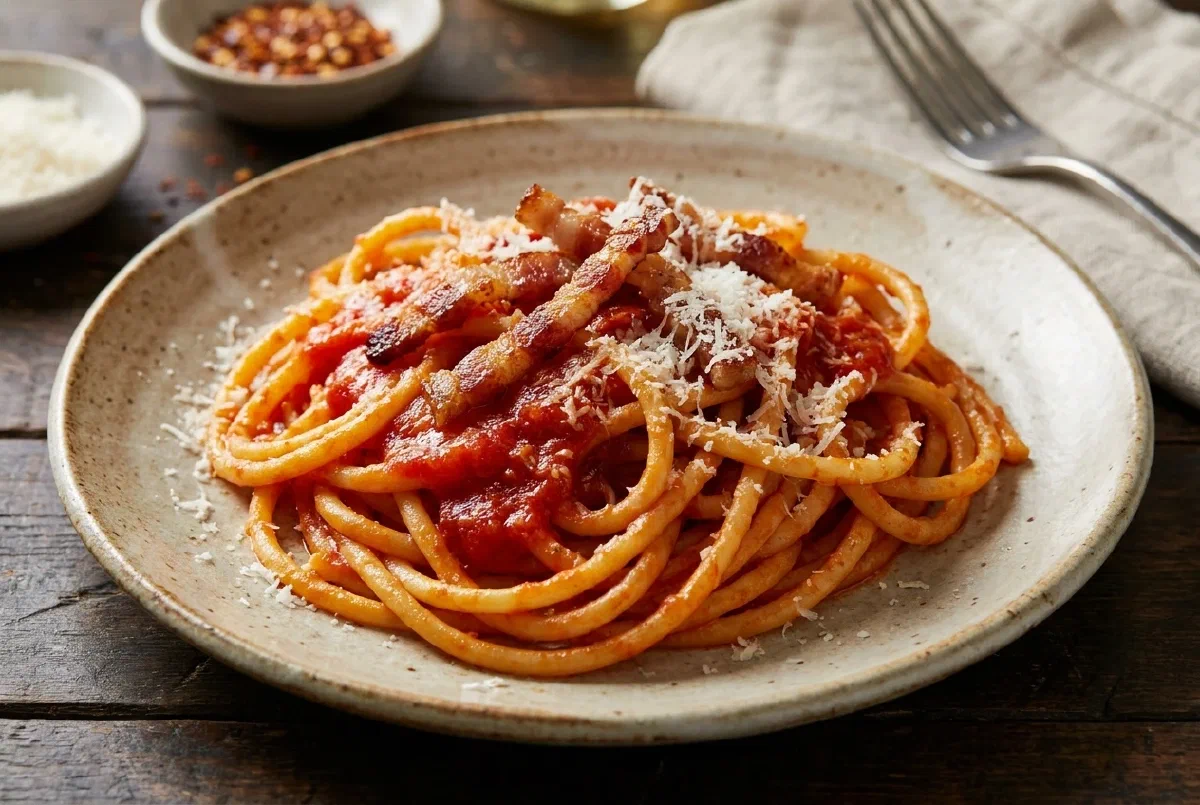
Looking for a pasta all’amatriciana that actually works, with no hidden tricks? This recipe follows the Lazio tradition step by step and explains the details that really make a difference.
Amatriciana is all about balance: the guanciale should be crisp but not dry, the tomato should support rather than dominate, and the Pecorino should be bold without becoming heavy. When those three elements come together properly, the dish is hard to resist.
It has at least three concrete advantages: it comes together in 30 minutes, requires very few ingredients, and delivers a satisfying result even for cooks with modest experience. The secret is not complexity — it is respecting the timing of each step.
The most important moment is browning the guanciale: cook it over medium heat without touching it too often, so it colours evenly. The other key step is the off-heat finishing: removing the pan from the flame before adding the Pecorino ensures the cheese melts evenly and forms a smooth sauce that coats every strand of pasta.
Both spaghetti and bucatini work well — bucatini is the more traditional choice, but either is excellent. If you cannot find guanciale, unsmoked flat pancetta is the most acceptable substitute, though the flavour will be different.
Serve immediately, straight from the pan: that is when it is at its best. Ready to go? Let us get started with the original amatriciana with guanciale.
To make this recipe
A small selection of handy tools to keep within reach. Some links may be affiliate links.
Large non-stick pan
Useful for cooking and sautéing ingredients evenly without overcrowding the surface.
Steps
- Cut the guanciale into strips and cook it in a dry pan over medium heat without adding any fat: it will release its own fat naturally and turn golden and crisp in 5–7 minutes.
- Once crisp and golden, set a small portion aside for finishing, then add the tomato passata directly into the rendered fat.
- Simmer the sauce for about 10 minutes until slightly reduced and the flavours concentrate. Add the chilli flakes at this stage if using.
- Cook the pasta al dente in well-salted water, then transfer it into the pan with a few tablespoons of pasta cooking water: the starch helps bind the sauce.
- Remove from the heat and stir in the Pecorino, mixing vigorously to get a smooth, creamy finish. Top with the reserved guanciale and serve immediately.
Helpful tips
Do not pierce or press the guanciale while it cooks — leave it undisturbed so it stays tender inside and crisp on the outside.
Always add the Pecorino off the heat: the residual warmth is enough to melt it without turning it grainy or clumping.
If the pasta looks too dry, add a small ladleful of cooking water before stirring in the cheese.
Leftovers keep in the fridge for up to 2 days; reheat gently in a pan with a splash of water over low heat.
Average nutrition per serving
- Calories
- 612 kcal
- Carbohydrates
- 63.0 g
- Sugars
- 6.0 g
- Protein
- 23.0 g
- Fat
- 29.0 g
- Saturated fat
- 10.0 g
- Fiber
- 3.0 g
- Sodium
- 720 mg
You might also like
Related recipes
Selected based on the same practical features as this recipe.
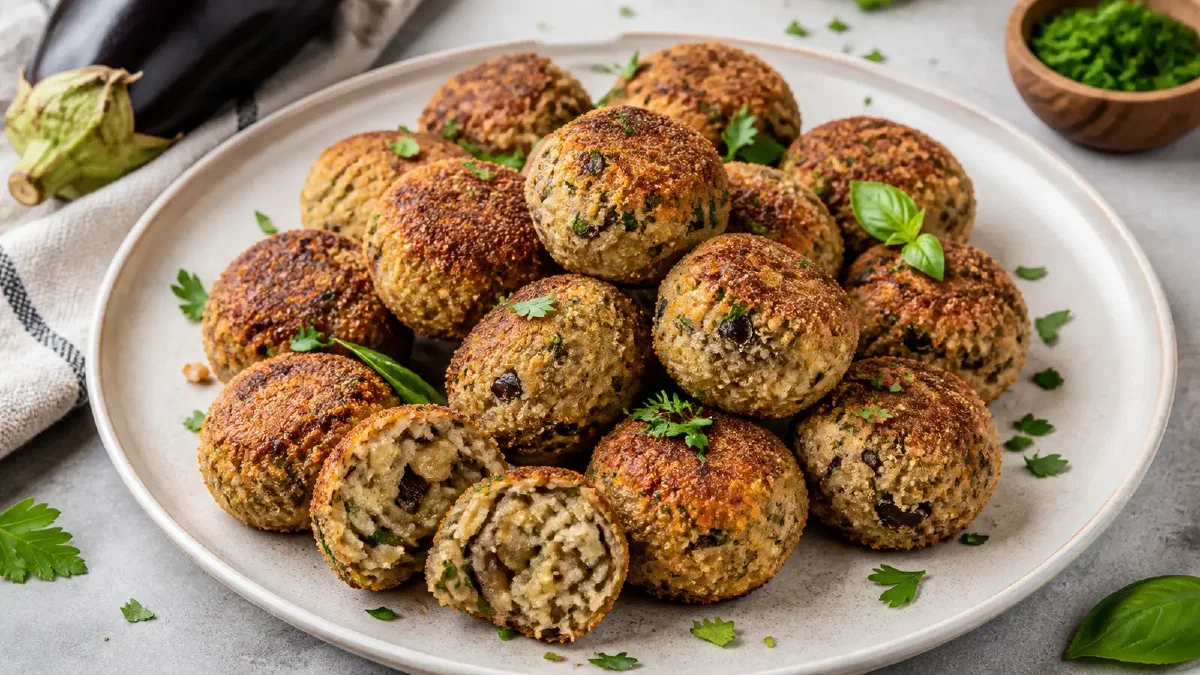
Baked Eggplant Meatballs, Easy and Full of Flavor
Baked eggplant meatballs that are crisp on the outside and soft in the middle, easy to make and perfect as a vegetarian starter or light dinner.
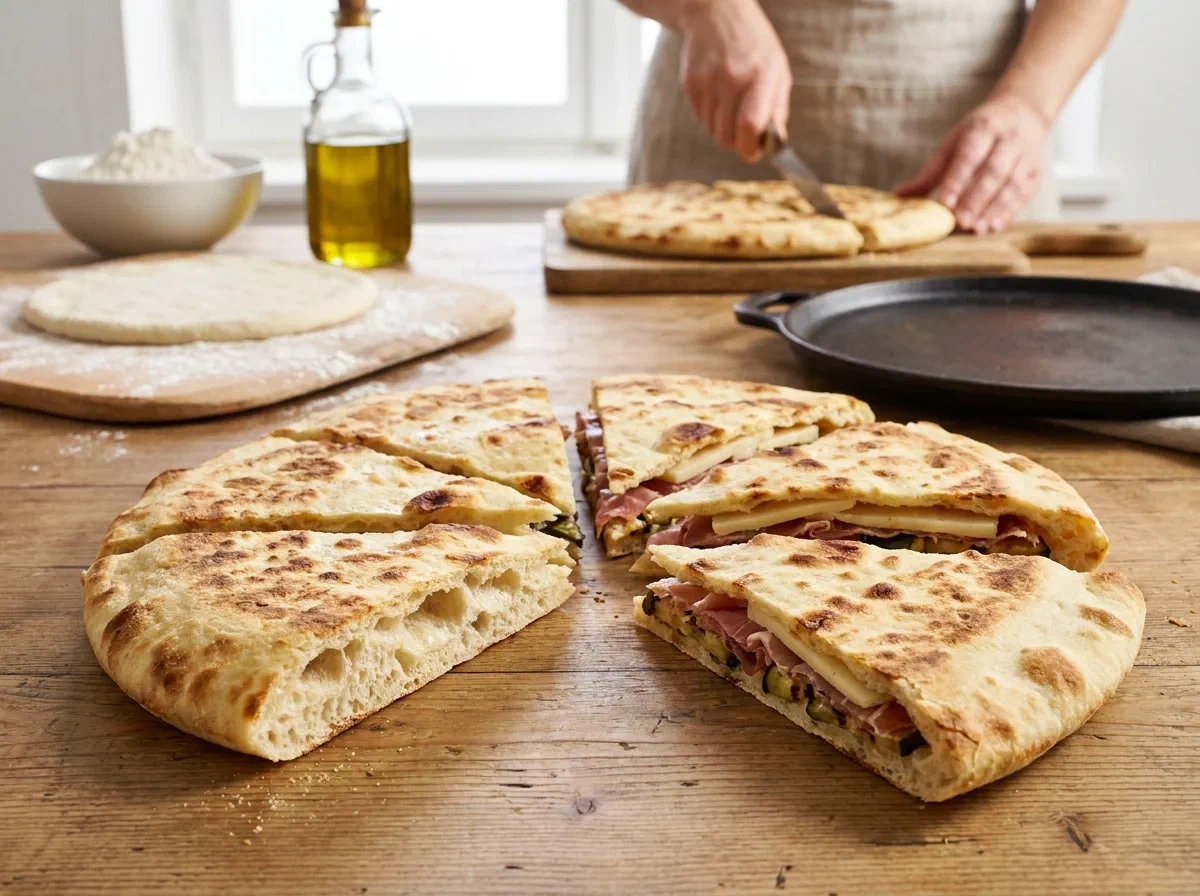
Umbrian torta al testo, soft and ready to fill
An Umbrian flatbread cooked in a pan, soft inside and lightly golden outside, ideal for many savoury fillings.
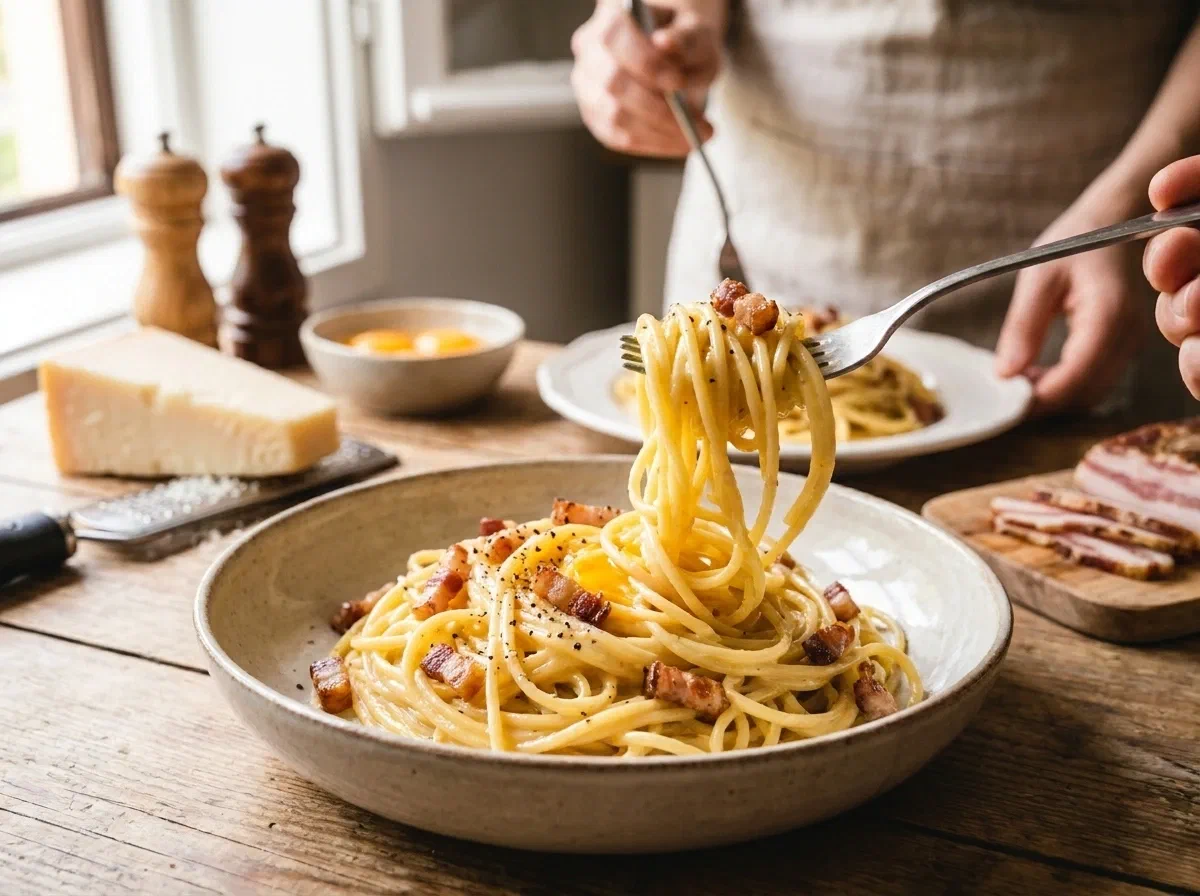
Spaghetti carbonara, creamy and well coated
Spaghetti carbonara with egg yolks, Pecorino and crisp guanciale, rich but balanced and properly creamy.