Fruit tartlets like a pastry shop
Fruit tartlets with crisp pastry, smooth custard and fresh fruit, perfect for parties, afternoon treats and elegant tables.
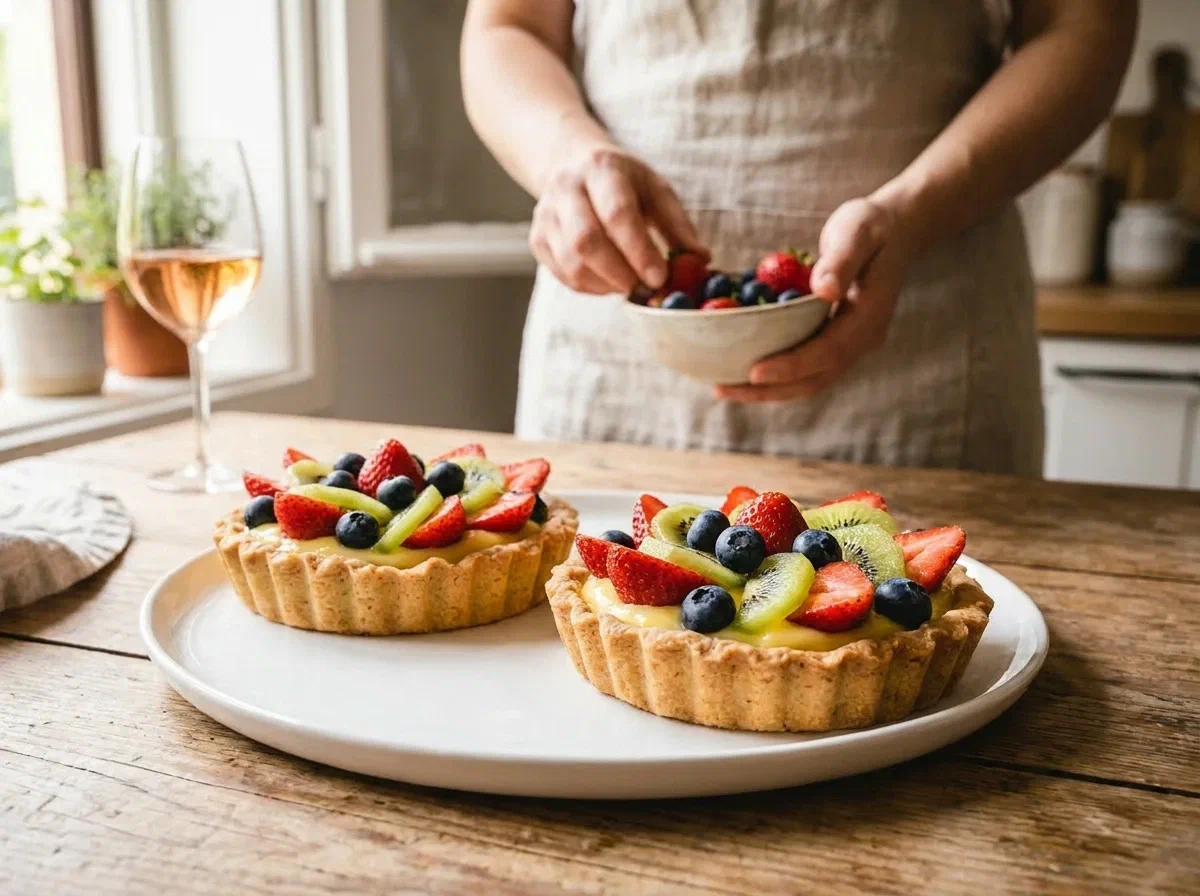
Looking for a single-serving dessert that looks impressive without professional equipment? Fruit tartlets are exactly that: a crisp shortcrust shell, silky custard and fresh fruit, all in one bite that feels like it came from an artisan patisserie.
The secret lies in the sequence: rested pastry, fully cooled custard, fruit added only at the last moment. Get those three steps right and the result is reliable even if you have little experience in baking.
This recipe has at least three practical advantages: it is modular — you can make the pastry and custard a day ahead and assemble everything in minutes; it works with any seasonal fruit, from spring strawberries to late-summer figs; and it travels well, since the baked shells and the custard can be transported separately and assembled on arrival.
One technical note: keep the butter genuinely cold while you make the dough and avoid overworking it, or the shells will turn tough after baking. The corn starch in the custard gives a stable, not-too-gelatinous consistency that holds well under the fruit. For a glossy patisserie finish, brush the fruit lightly with a little diluted neutral jelly.
The baked shells keep at room temperature for a day; the custard keeps in the fridge for up to two days. Assemble the fruit tartlets just before serving for the best result.
To make this recipe
A small selection of handy tools to keep within reach. Some links may be affiliate links.
Oven tray or baking dish
Perfect for baking meatballs and vegetables. Choose a non-stick tray for better results and easy cleaning.
Pastry whisk
Useful for whipping egg whites to stiff peaks and for gently folding the mixture without deflating it.
Digital kitchen scale
In leavened recipes and baked goods, it lets you accurately weigh flour, liquids, and yeast.
Steps
- Pour the flour onto your work surface in a mound, add the cold butter cut into small cubes and rub everything together with your fingertips until the mixture resembles wet sand, working quickly to keep the butter cold.
- Add the sugar and the whole egg, then press the dough together into a smooth ball. Wrap in cling film and refrigerate for at least 30 minutes — this resting time prevents the pastry from shrinking during baking.
- Roll the pastry to about 3 mm thickness, line individual tartlet moulds, prick the bases with a fork and blind bake in a conventional oven at 180°C (350°F) for 18-20 minutes, until the edges are golden.
- While the shells bake, heat the milk in a saucepan over medium heat until it just begins to steam. In a bowl, whisk the egg yolks with the remaining sugar and the corn starch until pale and smooth.
- Pour the hot milk over the yolk mixture in a thin stream, whisking constantly. Return everything to the pan over medium-low heat and cook, stirring continuously, until the custard thickens and pulls away from the sides. Remove from the heat, press cling film directly onto the surface and leave to cool completely.
- Once the shells are fully cooled and the custard is firm, fill each tartlet with a spoon or piping bag and arrange the fresh fruit on top in a neat pattern for a polished finish.
Helpful tips
The 30-minute rest in the fridge (ideally 1 hour) is passive but essential — without it the pastry shrinks and the sides collapse.
For a more fragrant custard, add the grated zest of half a lemon to the milk as it heats.
The filled tartlets keep in the fridge for up to 24 hours; add the fresh fruit just before serving to prevent it from releasing liquid.
Use any seasonal fruit: strawberries and kiwi in spring, peaches and blueberries in summer, figs and grapes in late summer.
Average nutrition per serving
- Calories
- 296 kcal
- Carbohydrates
- 37.0 g
- Sugars
- 20.0 g
- Protein
- 5.0 g
- Fat
- 14.0 g
- Saturated fat
- 8.0 g
- Fiber
- 1.8 g
- Sodium
- 70 mg
You might also like
Related recipes
Selected based on the same practical features as this recipe.
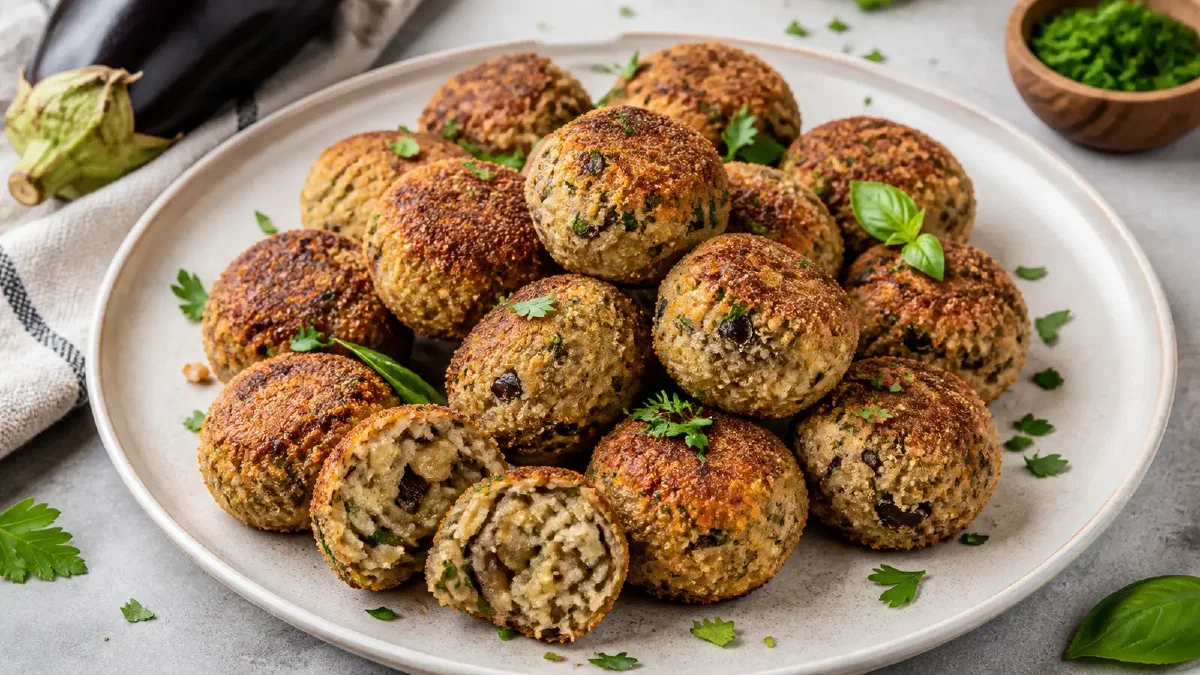
Baked Eggplant Meatballs, Easy and Full of Flavor
Baked eggplant meatballs that are crisp on the outside and soft in the middle, easy to make and perfect as a vegetarian starter or light dinner.
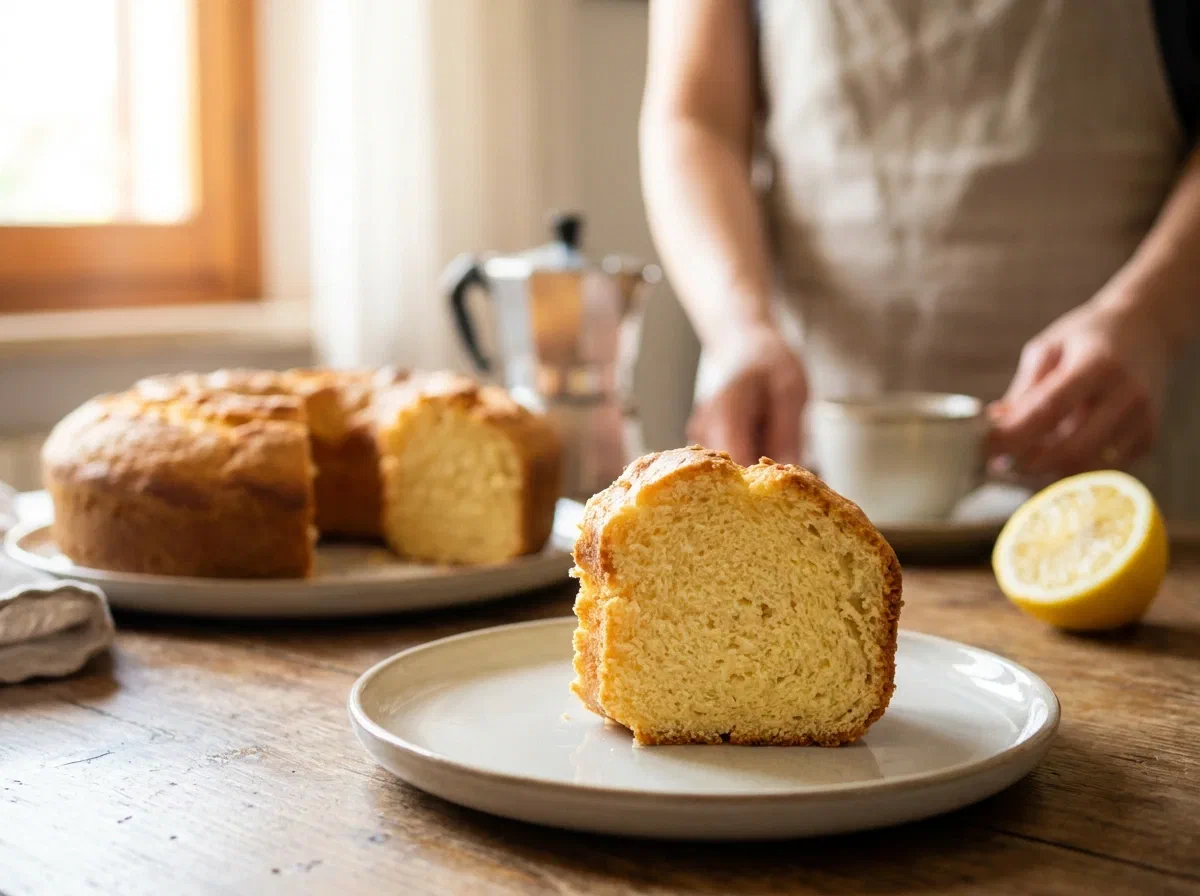
Water-based bundt cake without milk
An easy milk-free bundt cake, light and soft, ideal for everyday breakfast.
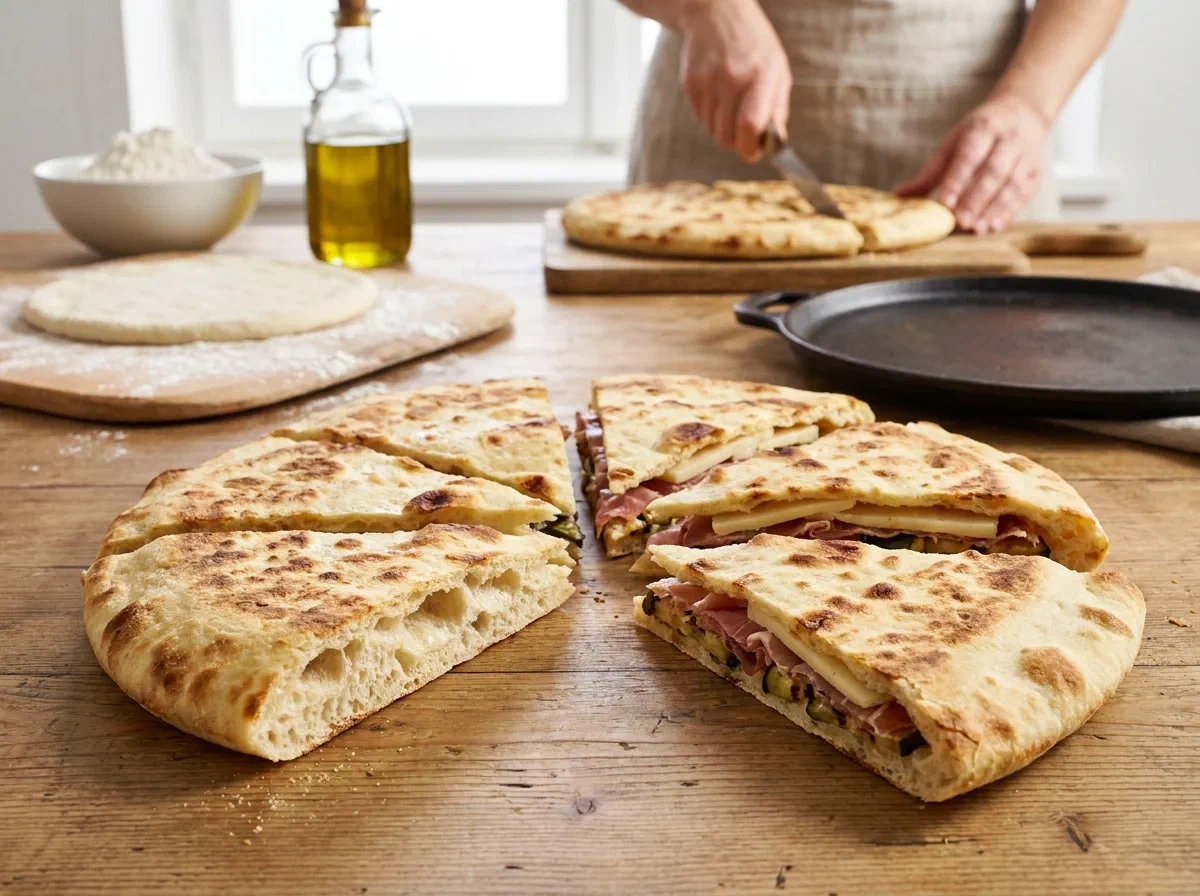
Umbrian torta al testo, soft and ready to fill
An Umbrian flatbread cooked in a pan, soft inside and lightly golden outside, ideal for many savoury fillings.