Homemade Genovese Pesto with Basil and Pine Nuts
Homemade Genovese pesto with basil, pine nuts, parmesan, and pecorino: creamy, fragrant, and ready in minutes, no cooking required.
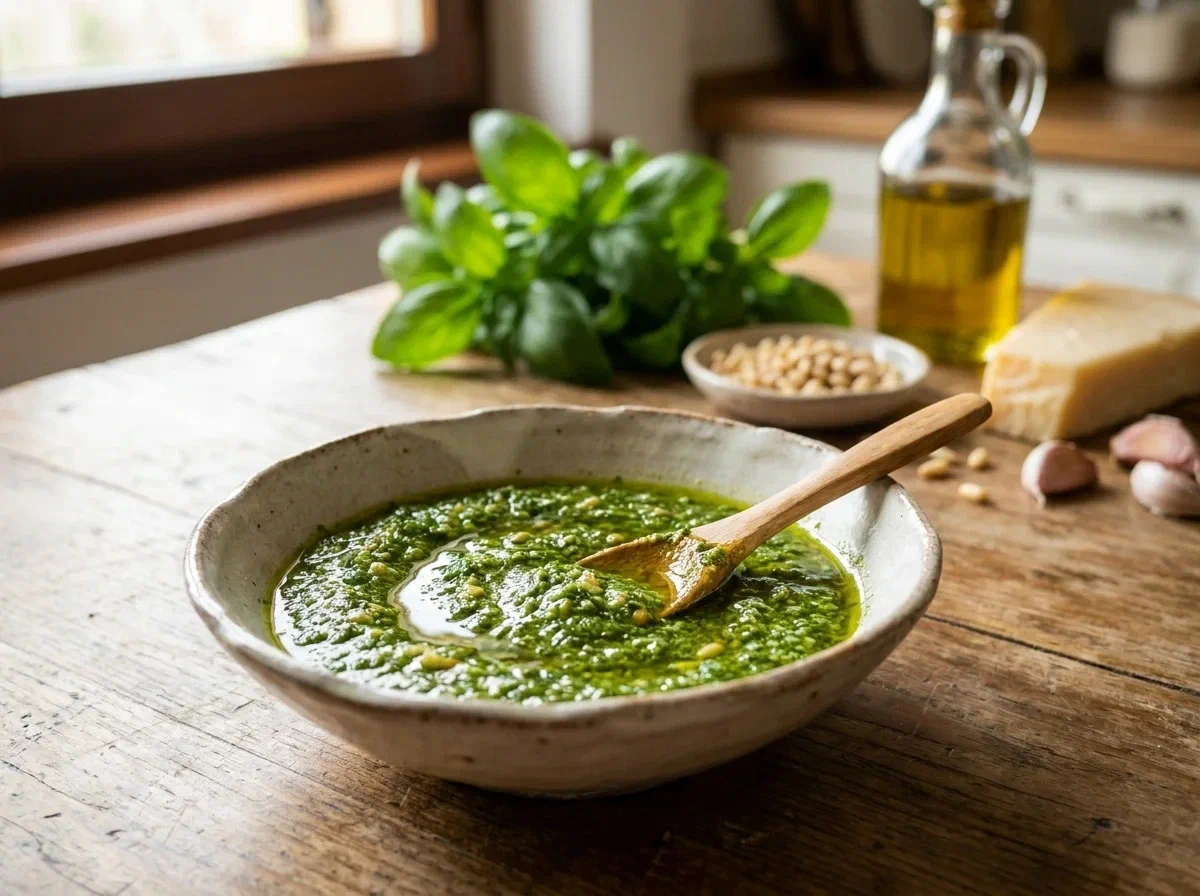
Want a Genovese pesto that’s bright green and fragrant, creamy at just the right point, light years from the industrial kind? Then follow this recipe: a few quality ingredients and a simple technique.
Genovese pesto is the raw Ligurian sauce par excellence: basil, pine nuts, garlic, parmesan, pecorino, and a good extra-virgin olive oil. It’s made with no cooking in minutes, and its only enemy is heat, which turns the basil dark.
It has at least three real advantages: it comes together in moments without turning on the stove, it’s the base of countless dishes (pasta, minestrone, bruschetta), and it keeps and freezes well, so you can perfume a dish anytime.
The most important tip is about the method: if you use a blender, work in short pulses so the blades don’t heat up. Heat oxidizes the basil and strips its color and aroma. For an even more vivid green, you can blanch the leaves for a few seconds before blending.
When you dress pasta with it, loosen the pesto with a spoonful of cooking water: it becomes creamier and binds better.
Ready? Let’s make Genovese pesto.
To make this recipe
A small selection of handy tools to keep within reach. Some links may be affiliate links.
Kitchen blender
Ideal for making smooth pestos and sauces. Choose a stable, powerful model for best results.
Steps
- Wash the basil leaves and dry them gently, without bruising them. It's important that they are well dried.
- Put the basil, pine nuts, garlic, and some of the oil in a blender. Blend in short pulses, to avoid heating the blades and oxidizing the basil.
- Add the parmesan and pecorino, then pour in the rest of the oil in a thin stream while pulsing, until you have a smooth green cream.
- Taste and adjust the salt. Use the pesto right away on pasta, or transfer it to a jar covered with a film of oil.
Helpful tips
Blend in short pulses and keep the blades cool: heat oxidizes the basil and turns it dark.
For a bright green, blanch the basil leaves for a few seconds and cool them in ice water before blending.
When dressing pasta, loosen the pesto with a spoonful of pasta water: it becomes creamier and clings better.
It keeps a few days in the fridge under a film of oil, or freezes in single portions.
Average nutrition per serving
- Calories
- 320 kcal
- Carbohydrates
- 3.0 g
- Sugars
- 1.0 g
- Protein
- 7.0 g
- Fat
- 32.0 g
- Saturated fat
- 6.0 g
- Fiber
- 1.0 g
- Sodium
- 280 mg
You might also like
Related recipes
Selected based on the same practical features as this recipe.
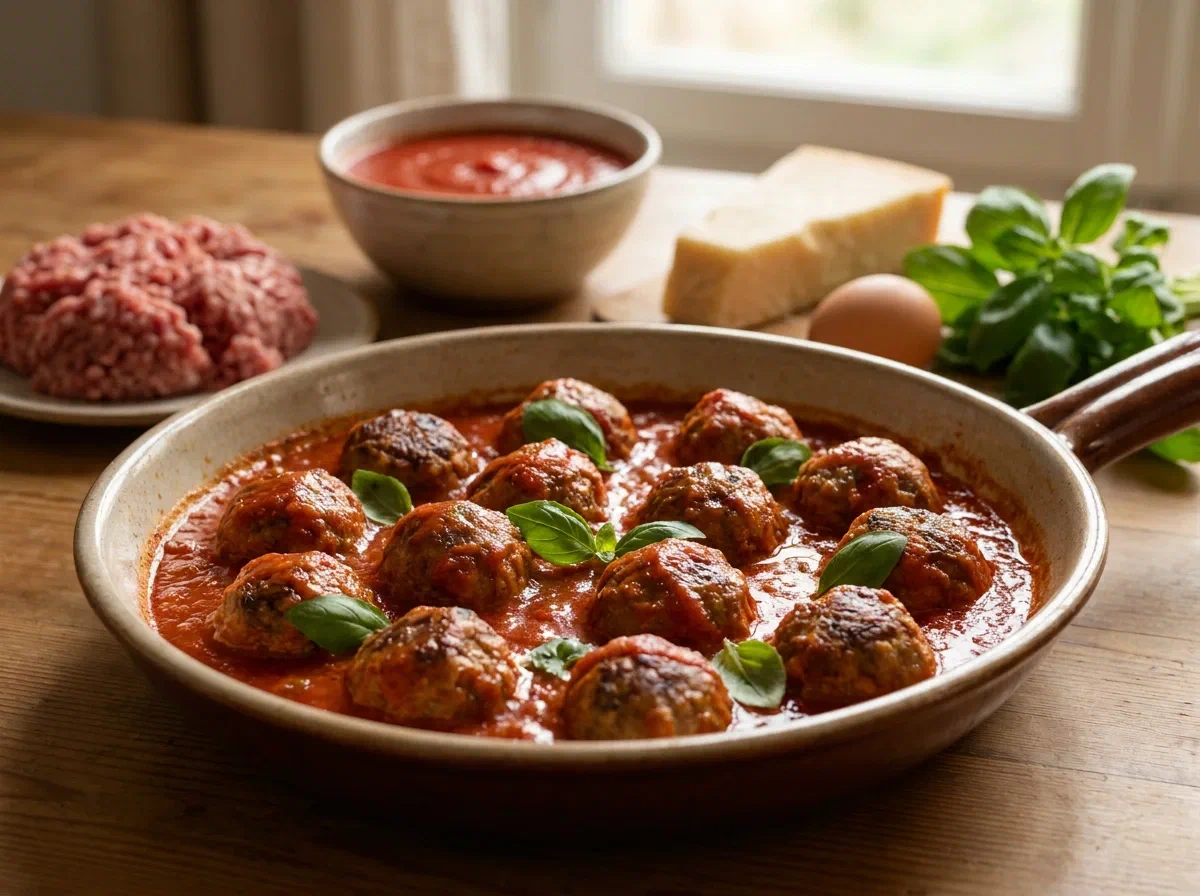
Tender Meatballs in Tomato Sauce, the Traditional Recipe
Tender traditional meatballs in tomato sauce, with ground meat, milk-soaked bread, and parmesan, slowly simmered in a basil tomato sauce.
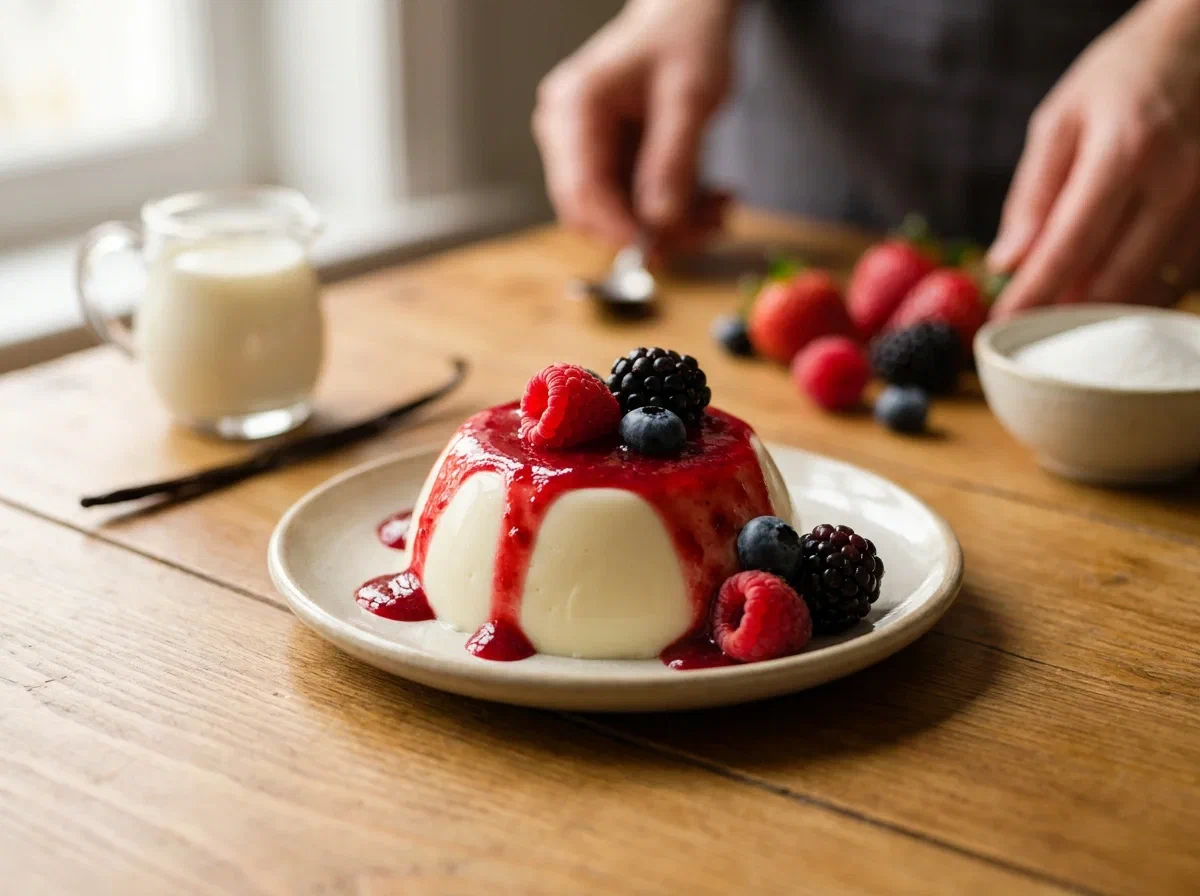
Classic Vanilla Panna Cotta with Mixed Berry Coulis
Classic vanilla panna cotta, soft and silky, with a mixed berry coulis: a no-bake spoon dessert, ready in just a few minutes.
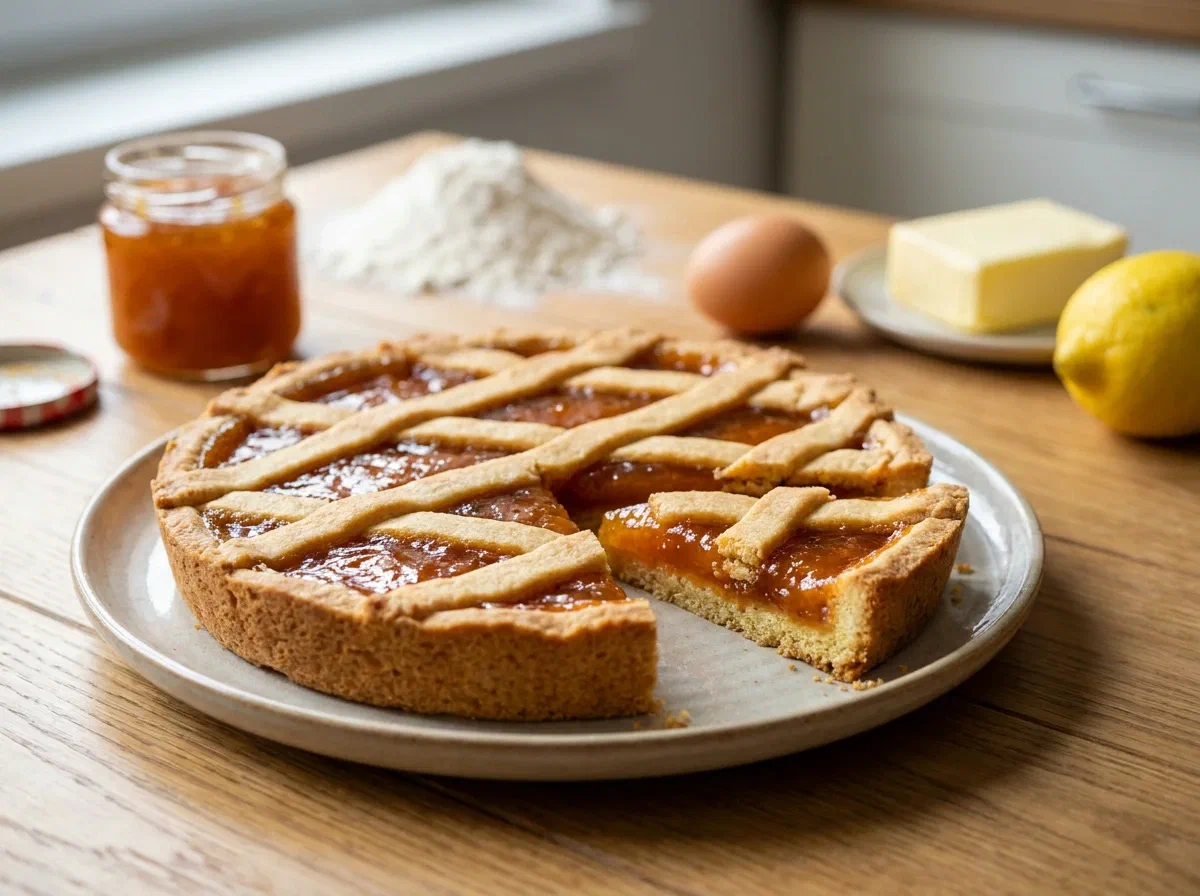
Classic Italian Crostata with Jam and Crumbly Shortcrust
The classic Italian crostata with crumbly shortcrust pastry and jam: the traditional breakfast bake, simple to make and always perfect.