Homemade scialatielli, Neapolitan pasta with milk and basil
Homemade scialatielli from Naples, made with semolina, milk, pecorino and basil: a short, thick fresh pasta with a rough surface that grips every sauce.
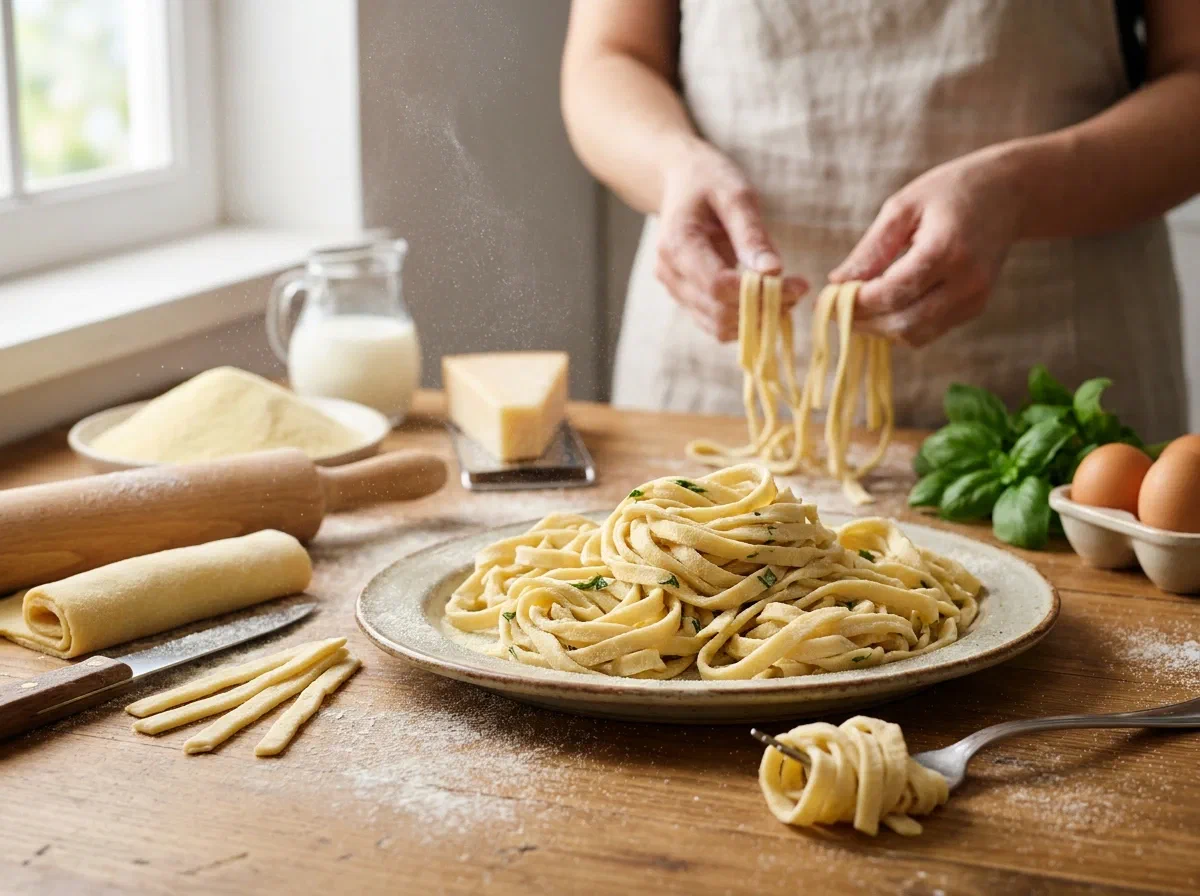
Are you looking for a recipe for homemade scialatielli, the short, thick fresh pasta eaten around Naples and along the Amalfi coast?
Then you are in the right place. I will walk you through the original dough, made with semolina, milk, pecorino and chopped basil, and show you how to cut scialatielli by hand with no machine and no special equipment.
Two precise choices set them apart from every other fresh pasta: milk instead of water, which perfumes the dough, and a deliberately generous thickness. This is pasta with character, rough and a little irregular, built to hold on to serious sauces.
There are at least three good reasons to make them: the ingredients cost very little, you do not need a pasta machine because the sheet stays thick, and once cut they freeze beautifully in a single layer.
The most useful trick is to knead for a long time, at least ten minutes, and then let the dough rest for half an hour. Without that rest the sheet shrinks back every time you try to roll it. And resist the urge to roll it thin, or you will simply have tagliatelle.
They were made for seafood, but a cherry tomato and basil sauce or a vegetable ragù works just as well: their rough surface does the rest.
Ready? Let’s get started with homemade scialatielli.
Steps
- Chop the basil finely with a knife and mix it on the work surface with the semolina, the flour, the pecorino and the salt, shaping the classic well.
- Crack the egg into the centre, add the oil and pour in the milk a little at a time, drawing the flour in from the edges with your fingertips until the dough starts to come together.
- Knead energetically for at least 10 minutes, pushing with the heel of your hand and folding the dough back on itself, until it turns smooth and firm. It should stay fairly stiff, not soft like a classic egg pasta.
- Wrap the dough in cling film and let it rest for 30 minutes at room temperature, so the gluten relaxes and the sheet rolls out without springing back.
- Roll the dough into a sheet about 3 mm thick, noticeably thicker than a sheet for tagliatelle: that thickness is what gives scialatielli their bite.
- Dust the sheet with semolina, roll it up loosely and cut strips half a centimetre wide, then trim them into sticks about 8 to 10 cm long.
- Unroll the scialatielli, spread them on a tray dusted with semolina and cook them in plenty of boiling salted water for 4 to 5 minutes, until they float and are still al dente. Drain and dress them immediately.
Helpful tips
Milk instead of water is the signature of scialatielli: it makes the dough fragrant and slightly tender under the tooth.
Do not roll the sheet too thin: scialatielli must stay thick and rough, otherwise they turn into plain tagliatelle.
If you are not cooking them right away, let them dry for 30 minutes on the floured tray or freeze them in a single layer and cook them straight from frozen.
They were born for seafood sauces, but they also stand up to a vegetable ragù or a simple cherry tomato and basil sauce.
Average nutrition per serving
- Calories
- 430 kcal
- Carbohydrates
- 72.0 g
- Sugars
- 3.0 g
- Protein
- 15.0 g
- Fat
- 8.0 g
- Saturated fat
- 3.5 g
- Fiber
- 3.0 g
- Sodium
- 180 mg
You might also like
Related recipes
Selected based on the same practical features as this recipe.
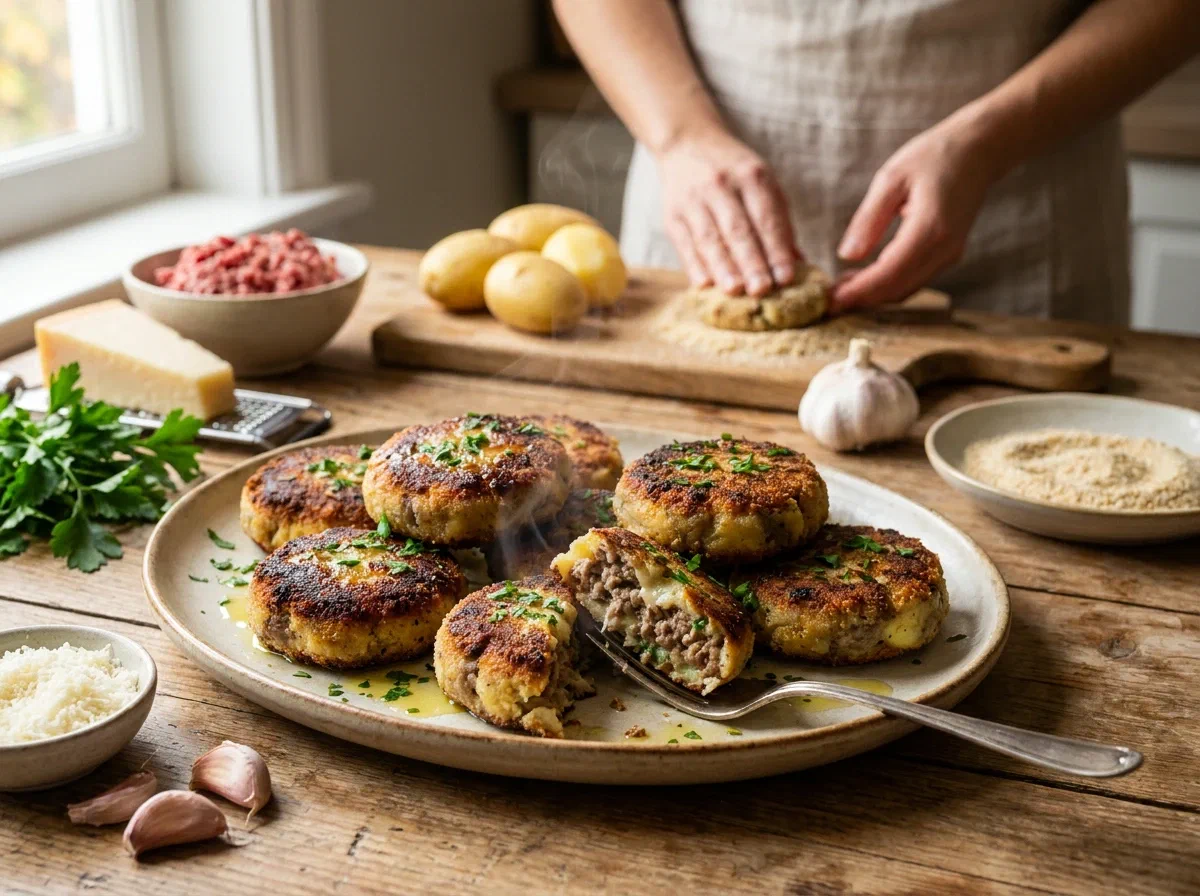
Pan-fried potato and beef patties, crisp outside and soft inside
Patties made with mashed boiled potatoes and ground meat, pecorino, Parmesan, garlic and parsley, coated in breadcrumbs and pan-fried flattened in a drizzle of olive oil.
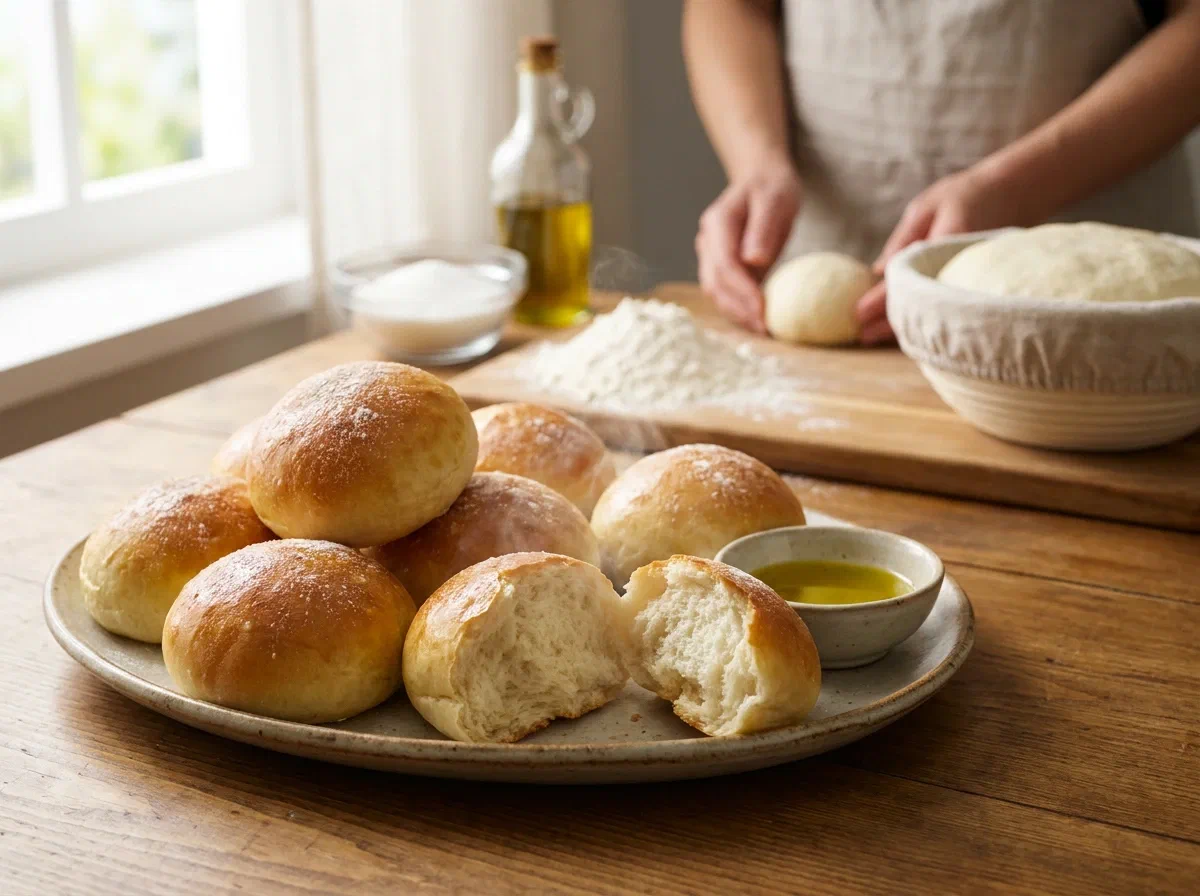
Super soft olive oil bread rolls, just like the bakery
Soft Italian olive oil rolls made with just six ingredients and a double rise: a thin golden crust, a white cottony crumb and no butter, milk or eggs at all.
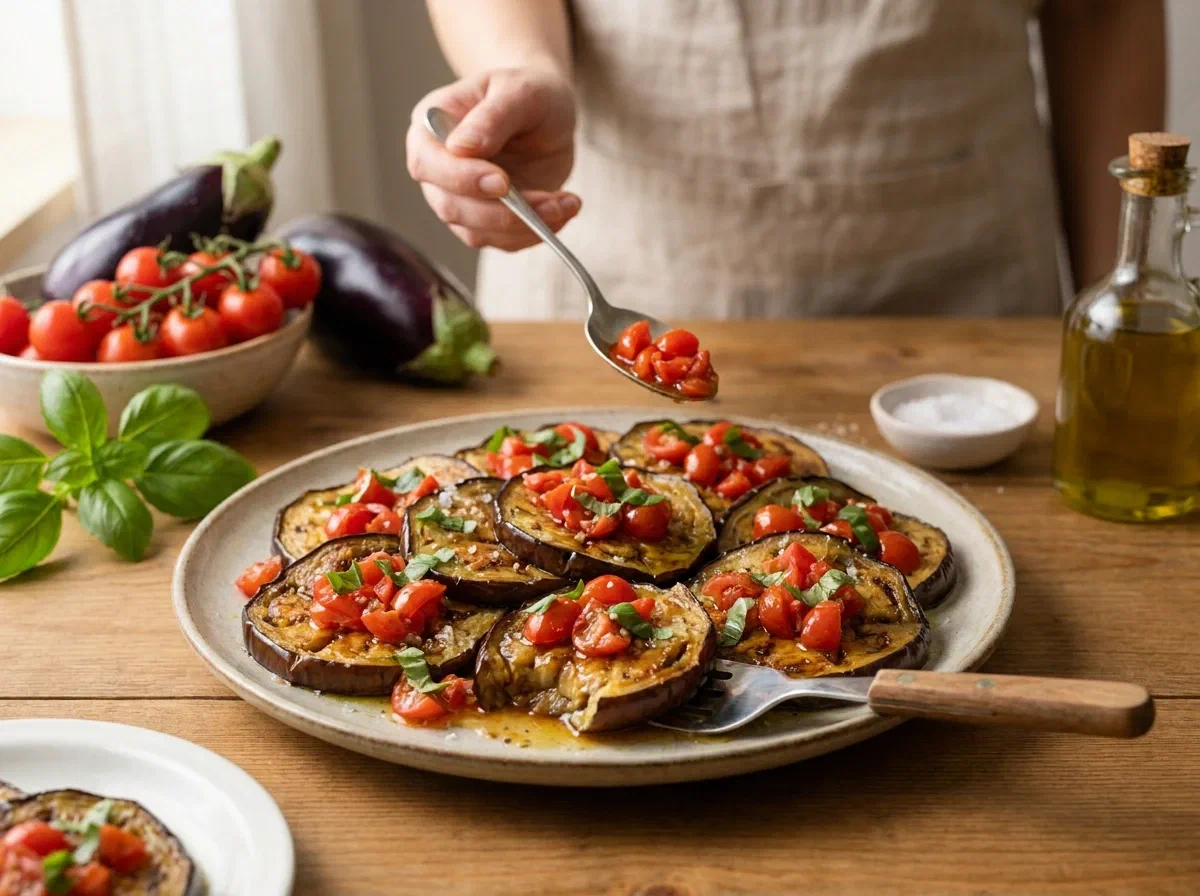
Baked aubergine rounds with cherry tomatoes, served cold
Aubergine rounds baked until meltingly soft, then cooled and topped with finely chopped cherry tomatoes, olive oil and basil. A very simple summer cold dish.