Seafood carbonara with octopus
A seafood carbonara with octopus and an egg-and-Pecorino cream, original but still balanced and creamy.
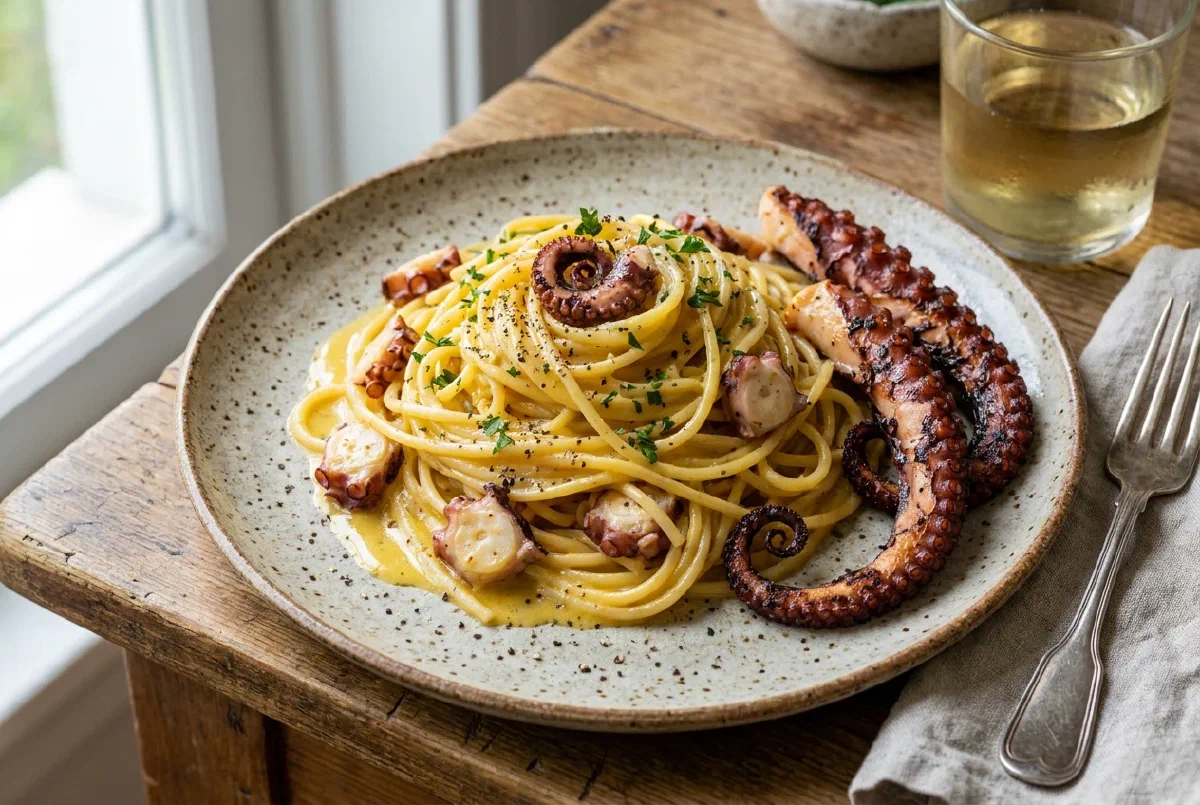
Looking for a seafood pasta that goes beyond a simple tomato sauce — something with that rich, silky quality that makes a great plate of pasta impossible to stop eating? This octopus carbonara is exactly that.
The idea is straightforward: take the technique behind a classic carbonara — egg yolks, Pecorino, black pepper — and bring it into a seafood context, using octopus in place of guanciale. The result stands on its own, with a flavour profile that is genuinely distinct rather than imitative.
It works for three main reasons. First, cooked octopus holds its shape during tossing, adding real texture to the dish rather than disappearing into the sauce. Second, the salty sharpness of Pecorino pairs surprisingly well with the flavour of the sea. Third, the cream of egg yolks without any added cream keeps the whole thing light and glossy.
The one technical point is the same as with any carbonara: add the egg mixture with the heat completely off. A moment of inattention turns a silky sauce into scrambled eggs. Take it off the heat, toss quickly, and the result will be impeccable.
Spaghetti work well here, but rigatoni are a fine alternative if you prefer. And if you cannot find pre-cooked octopus, cook it yourself the day before — it is actually better that way, becoming more tender after a night in the fridge.
Ready to start? Here is the full recipe for seafood carbonara with octopus.
To make this recipe
A small selection of handy tools to keep within reach. Some links may be affiliate links.
Large non-stick pan
Useful for cooking and sautéing ingredients evenly without overcrowding the surface.
Steps
- Cut the cooked octopus into bite-sized pieces — not too small, so it keeps its texture in the finished dish. Sauté in a wide pan with a little oil over medium-high heat for 2–3 minutes, just enough to warm it through and add some colour.
- Cook the spaghetti in lightly salted water — less salt than usual, since the Pecorino is already quite salty — and drain just before al dente, reserving about 100 ml of pasta cooking water.
- In a large bowl, whisk the egg yolks together with the grated Pecorino and a generous amount of freshly ground black pepper until you have a thick, smooth cream.
- Transfer the spaghetti directly into the pan with the octopus, with the heat off. Add a few tablespoons of pasta water and toss well to combine.
- Remove the pan from any residual heat and pour in the egg cream, tossing energetically with tongs or a large fork. The residual heat of the pasta is enough to thicken the sauce without scrambling the eggs.
- Serve immediately in warm bowls with an extra grind of black pepper.
Helpful tips
The golden rule of carbonara applies here too: always add the egg cream with the heat off, otherwise it will scramble and lose its glossy finish.
If your octopus is not pre-cooked, simmer it in unsalted water for 40–50 minutes, then let it cool in its cooking liquid before using.
For an even creamier result, add half an extra yolk or a splash more pasta water while tossing.
Leftovers keep in the fridge for one day; reheat very gently over the lowest heat with a tiny splash of water, stirring immediately.
Average nutrition per serving
- Calories
- 556 kcal
- Carbohydrates
- 60.0 g
- Sugars
- 2.0 g
- Protein
- 29.0 g
- Fat
- 22.0 g
- Saturated fat
- 7.0 g
- Fiber
- 2.5 g
- Sodium
- 590 mg
You might also like
Related recipes
Selected based on the same practical features as this recipe.

Baked Eggplant Meatballs, Easy and Full of Flavor
Baked eggplant meatballs that are crisp on the outside and soft in the middle, easy to make and perfect as a vegetarian starter or light dinner.

Umbrian torta al testo, soft and ready to fill
An Umbrian flatbread cooked in a pan, soft inside and lightly golden outside, ideal for many savoury fillings.
Spaghetti carbonara, creamy and well coated
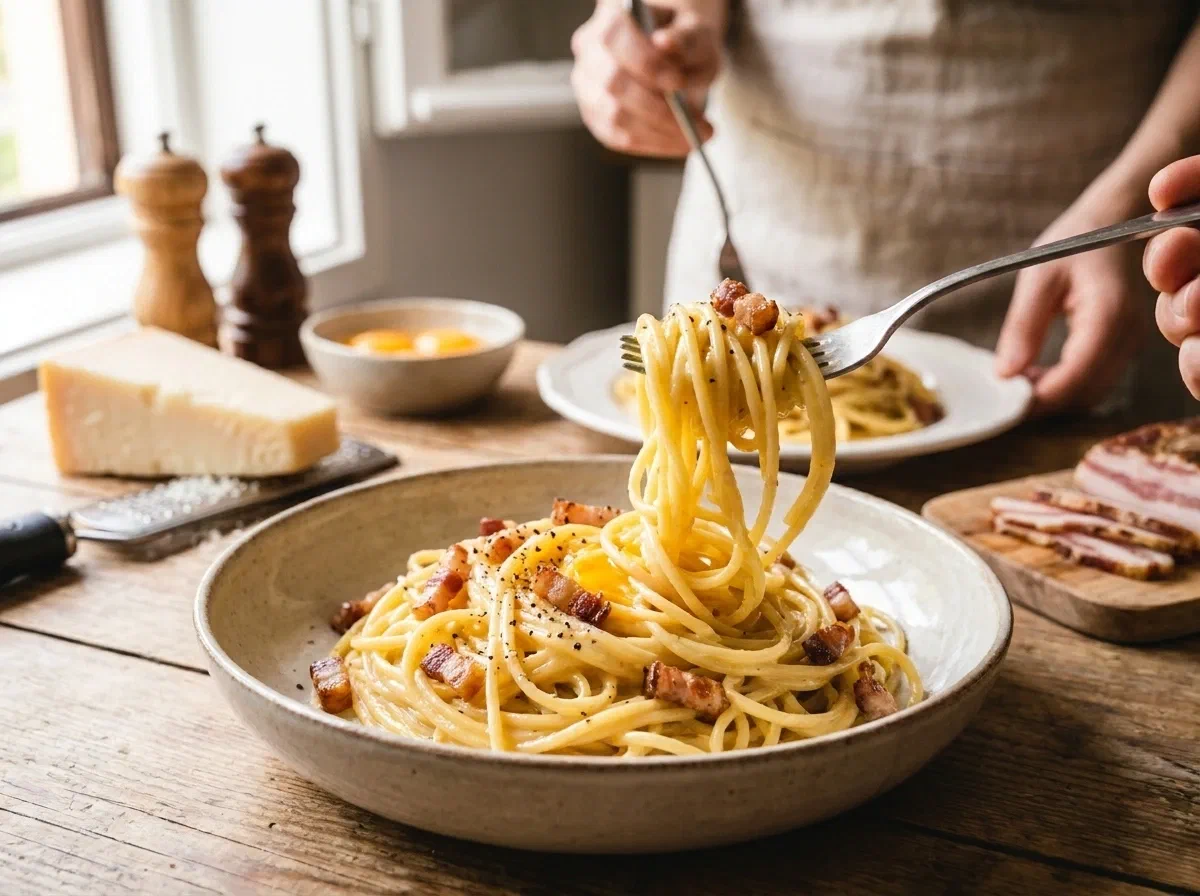
Spaghetti carbonara with egg yolks, Pecorino and crisp guanciale, rich but balanced and properly creamy.