Super soft olive oil bread rolls, just like the bakery
Soft Italian olive oil rolls made with just six ingredients and a double rise: a thin golden crust, a white cottony crumb and no butter, milk or eggs at all.
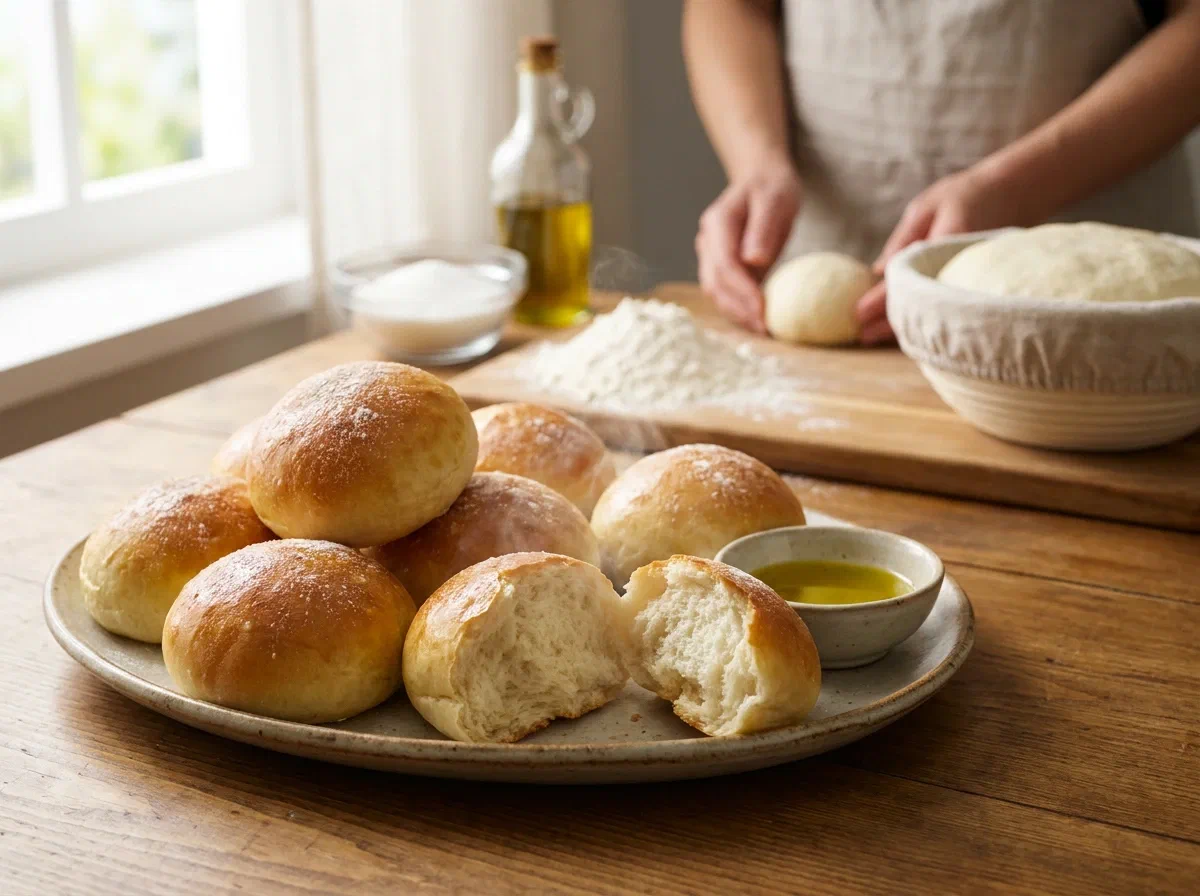
Are you after really soft bread rolls, the kind you can squash between your fingers and watch spring straight back? Then this is the recipe you want, with six ingredients in total, no special equipment and a double rise that does nearly all the work for you.
The secret is not in the shopping list, which is very short, but in the oil. It replaces butter, softens the gluten network and keeps the crumb tender even the next day, when rolls made with lard alone or with no fat at all are already turning firm. The sugar, in a quantity that never makes them sweet, gets the yeast moving faster and gives that amber bakery colour to the crust.
There are at least three advantages here: it costs very little, it needs neither a stand mixer nor speciality flour, and it is naturally free from milk, butter and eggs, so it works for guests who avoid them.
The step that matters most comes after the first rise. When you shape the balls, do not flatten or re-knead the dough: tear it and round it gently, because the air already inside is what gives the finished rolls their softness.
They stay soft for two days in a well-sealed plastic bag and are perfect split and filled. Ready? Let’s get started with these super soft olive oil bread rolls.
Steps
- Tip the flour into a large bowl with the sugar and the salt and stir the dry ingredients together with a fork: keeping the salt away from direct contact with the yeast helps the rise get going smoothly.
- Dissolve the yeast in the lukewarm water in a glass, never hot water, then add the oil and stir. Water at around 35°C wakes the yeast up, above 45°C it damages it and the rolls will not grow.
- Pour the liquid over the flour a little at a time, mixing first with the fork and then with your hands, until every trace of flour is absorbed and no dry patches are left at the bottom.
- Knead on the work surface for 8 to 10 minutes, stretching the dough out and folding it back on itself, until you have a smooth, elastic ball that is only just tacky to the touch.
- Cover the bowl with cling film or a damp cloth and leave to rise for 2 hours somewhere warm and draught free, until the dough has doubled in size.
- Turn the dough out onto a lightly floured surface and tear off pieces of about 70 g without pressing it down: the gas trapped by the rise is exactly what makes the rolls soft, so handle it gently.
- Shape each piece into a ball by rolling it under your cupped palm, tucking the dough underneath, so the top stays smooth and taut and the roll grows upwards rather than sideways.
- Arrange the balls on a lined baking tray at least 4 cm apart, cover them and leave to rise for another hour: they should look visibly puffed and feel soft and light when you touch them.
- Bake at 180°C (350°F) in a fan oven, on a low shelf, for 18 to 20 minutes, until the tops are evenly golden and the bases sound hollow when tapped.
- Take them out and cool on a wire rack under a clean tea towel: the trapped steam keeps the crust thin and the crumb soft for far longer.
Helpful tips
The two rises take about 3 hours in total and are not counted in the preparation time: if your kitchen is cold, put the bowl in the switched-off oven with just the light on.
For a glossy amber crust, brush the rolls with a splash of plant milk, or with sugar dissolved in water, right before baking: with no eggs in the dough it is the easiest way to colour them.
If you prefer larger rolls, shape 8 balls of about 110 g and add 4 to 5 minutes to the baking time, still on the low shelf.
They freeze beautifully: bag them only once completely cold and reheat for 5 minutes at 160°C to bring them back to just-baked.
Average nutrition per serving
- Calories
- 191 kcal
- Carbohydrates
- 33.0 g
- Sugars
- 3.3 g
- Protein
- 4.6 g
- Fat
- 3.8 g
- Saturated fat
- 0.6 g
- Fiber
- 1.1 g
- Sodium
- 325 mg
You might also like
Related recipes
Selected based on the same practical features as this recipe.
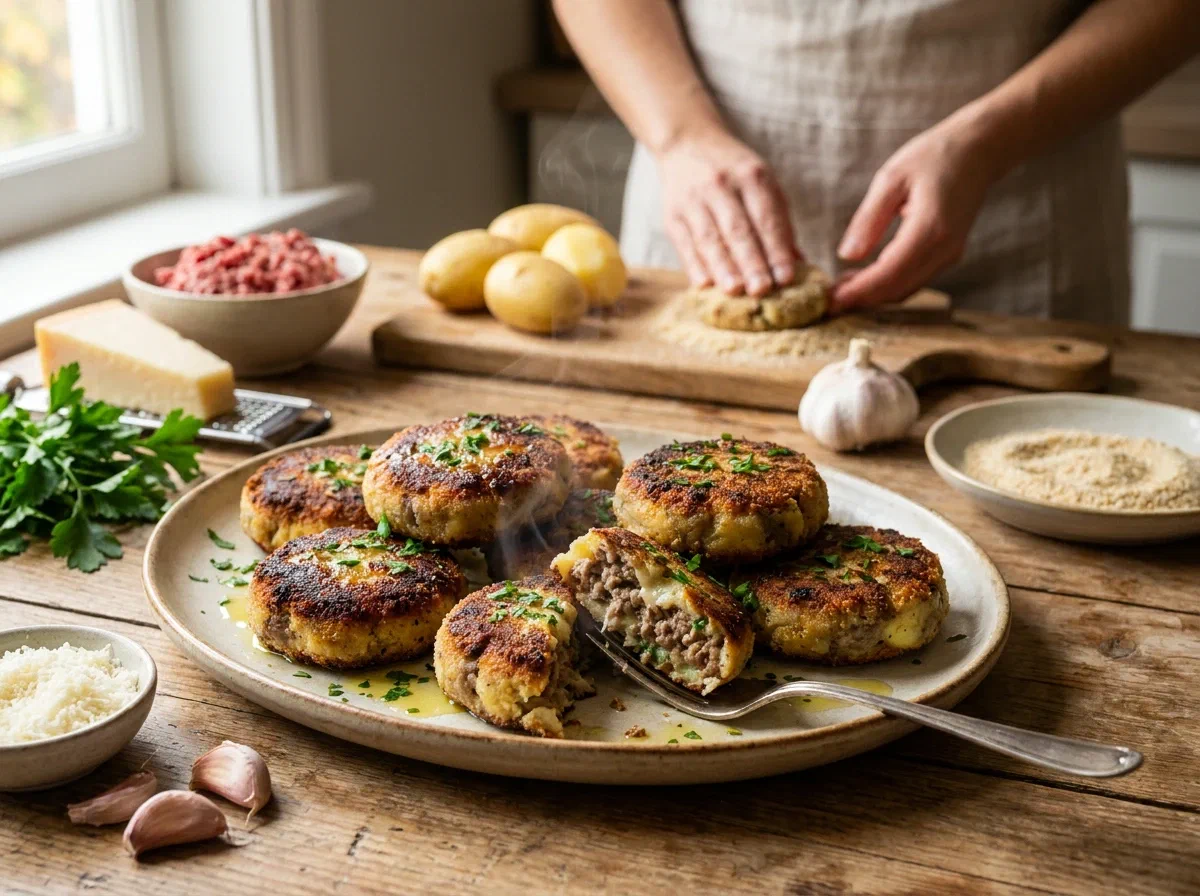
Pan-fried potato and beef patties, crisp outside and soft inside
Patties made with mashed boiled potatoes and ground meat, pecorino, Parmesan, garlic and parsley, coated in breadcrumbs and pan-fried flattened in a drizzle of olive oil.
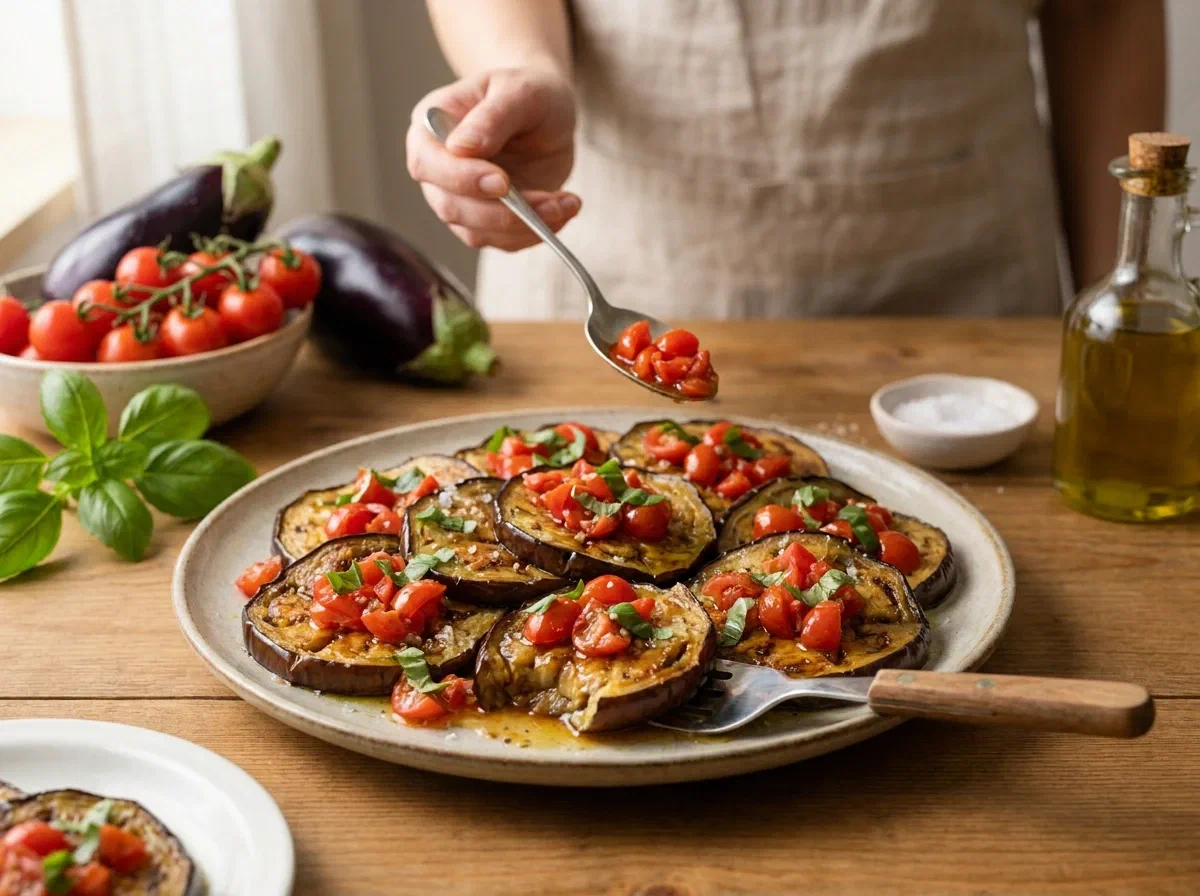
Baked aubergine rounds with cherry tomatoes, served cold
Aubergine rounds baked until meltingly soft, then cooled and topped with finely chopped cherry tomatoes, olive oil and basil. A very simple summer cold dish.
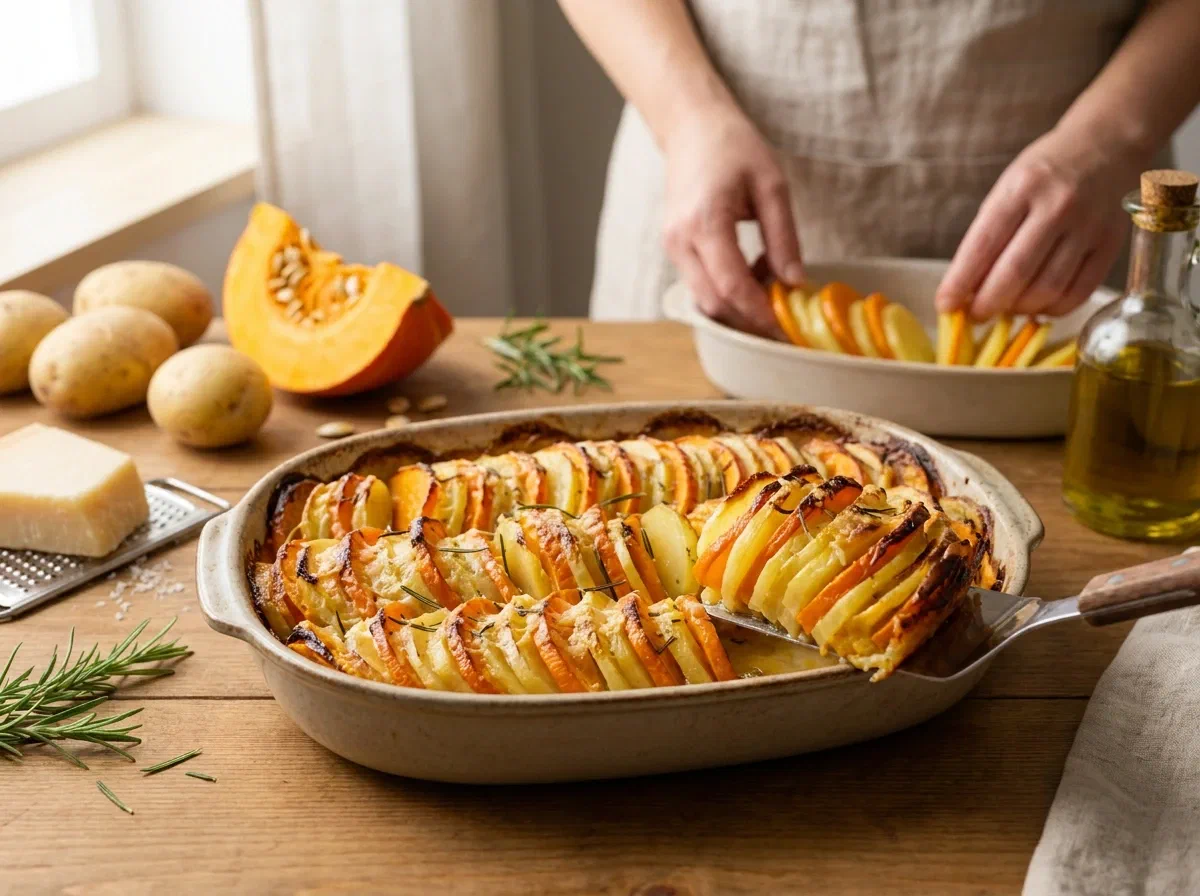
Baked potato and pumpkin gratin with crisp golden edges
A baked potato and pumpkin gratin with thin slices stacked upright, seasoned with parmesan and rosemary and roasted until the top edges turn crisp and golden.